Teleradiology has long been controversial, despite its advantages.
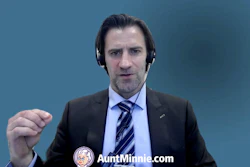
Radiologist Arjun Kalyanpur, MD, founder and CEO of Teleradiology Solutions, guests for Episode 19 of the Keeping Up with the Radiologists podcast from AuntMinnie and Penn Radiology, hosted by Saurabh (Harry) Jha, MD.
Teleradiology Solutions operates both a U.S. practice and an international practice in Europe and the Middle East, handling cases across multiple healthcare systems, academic centers, and community practices, according to Kalyanpur. Reflecting on teleradiology's road to mainstream practice, history is repeating itself with AI, he says.
"I believe that the synergies between teleradiology and AI are so profound that they have a multiplier effect on each other and effectively run together," he notes.
In Episode 19, the head of Teleradiology Solutions explains that his practices use AI in the emergency department and in breast cancer screening. In the first half of the episode, hear how a teleradiology model evolved from emergency radiology and Kalyanpur reporting from India as Yale faculty. In the second half of the program, listen for AI initiatives in Kalyanpur's practices today.
Viewpoints shared also envision teleradiology beyond a private practice-style model, to academic radiology in a teleradiology environment.
Kalyanpur adds, "the logic of reimbursement [for teleradiologist reads] shouldn't really change just because of their location ... as long as they meet your regulatory requirements, their physical location shouldn't really matter from a billing perspective." It is time to rethink some policies, according to Kalyanpur. Listen now.
Competitive force revealed
In 2006 on AuntMinnie, Howard Forman, MD, from Yale University School of Medicine, then associate editor of health policy for the American Roentgen Ray Society (ARRS), said several factors made extensive offshoring teleradiology an unlikely competitive force in the future of radiology.
At the time, a teleradiology proof-of-concept was evolving at Yale. Then came data that teleradiology providers were handling after-hours caseload -- and doing it effectively.
When "offshoring" came to be viewed negatively, Yale scrapped the project initially, according to Kalyanpur.
"With any paradigm-shifting technology or process, there's always a concern that comes with it," he explained. "And we see the same thing with AI today. It's interesting to me to see the history repeating itself. The first concern, is this going to take our jobs away or is this going to reduce our income? And that was the concern with teleradiology. The moment it was perceived as being delivered from overseas, of course, that concern was magnified."
However, teleradiology would begin to offer opportunities, especially for American-board-certified radiologists to return to their home countries to practice. Fellow Yale-trained radiologist Kalyanpur left for his homeland and went on to establish Teleradiology Solutions in Bangalore, India.
"The year I completed my residency, Yale had just started an emergency radiology division with 24–7 coverage," he reflected. "I was one of two radiologists covering the night shifts in the Yale ER and we'd do week on, week off, and it was pretty intense. So I got to see emergency radiology upfront, up close, and personal."
Emergency radiology roots
A eureka moment struck after Kalyanpur's enduring a long commute back to Yale, continuing to work nights in the ER. He could cover those shifts during the daytime in India, he recounted. The next step was a research project with Massachusetts General Hospital (MGH), he said.
"I rented a room in a small transcription center in Bangalore at that time. Those were the best places with the best connectivity," he explained. "And for a month reported scans in parallel with the radiologists in the ER at Yale in real time."
"We were able to compare both turnaround time and accuracy, and we found there was actually a slight benefit to the overseas model in both respects," Kalyanpur said. "I think when the two independent reviewers saw that data, went through it, and validated it, we really began to appreciate the power of the concept. First proving that it worked made a big difference in terms of establishing the credibility of the model."
Focus vs distraction
Testing teleradiology has contrasted the intensity of emergency room radiology compared to working in a teleradiology model, according to Kalyanpur.
"What became apparent was that the teleradiology model does, in a sense, give the radiologist the ability to focus on the task on hand, which is to analyze and interpret the study," Kalyanpur said. "The radiologist in the emergency room, on the other hand, is inundated with a million different distracting requests and requirements. So that can be a difficult environment to also be interpreting studies."
Furthermore, radiologists in Europe, in places like Italy, Austria, and Turkey, have huge global potential, added Kalyanpur.
"The interesting part is I see even today the potential for delivering high-quality diagnostic services through a global system of delivery is intensely powerful and AI is only going to make it more so," Kalyanpur continued.
The power of AI is tangible, according to Kalyanpur, whose AI discovery journey has included realizing how good it can be and also seeing where it can cause problems as the group focuses on AI in emergency radiology and also early breast cancer detection.
Outsourcing has expanded
Today, Teleradiology Solutions' collaboration with MGH of delivering 3D services to the MGH emergency room after hours is a solid model, Kalyanpur noted.
"We find that there is a lot of 3D imaging that happens after hours, [for] which having global delivery with our center in Bangalore is of value to a hospital of the size of MGH," Kalyanpur explained. "We believe that the same would apply to other tertiary care institutions as well."
It's based on the same principle that after-hours 3D post-processing can be done very effectively by staff located diametrically opposite the world, he said.
"And because it's a very labor-intensive process, so rather than having the same person doing it at night in hospital, the outsourced model works very well."
Listen for the full story.
Keeping Up with the Radiologists is hosted by Saurabh (Harry) Jha, MD, associate professor of radiology at the Hospital of the University of Pennsylvania. Jha obtained a master’s degree in health policy research from the Leonard Davis Institute at the University of Pennsylvania. He earned his medical degree from the United Medical and Dental Schools of Guy’s, King’s, and St. Thomas’ Hospitals. Jha developed Value of Imaging, a set of radiology educational resources.
Episode 19 of Keeping Up with the Radiologists is brought to you by AuntMinnie.com in collaboration with Penn Radiology. Check back for new episodes. You can also subscribe to the AuntMinnie Podcast Network through Apple Podcasts and Spotify.