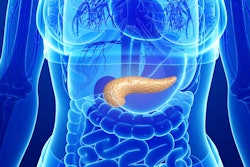
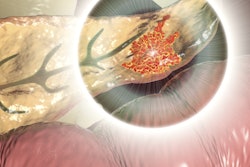
An AI model can detect early, subtle tissue changes of pancreatic ductal adenocarcinoma (PDA) -- which despite being the most common form of pancreatic cancer is difficult to spot on conventional imaging, researchers have reported.
The findings could help shift diagnosis of PDA from late-stage terminal disease to early-stage treatable disease, according to a team led by Sovanlal Mukherjee, PhD, of the Mayo Clinic in Rochester, MN. The group's work was published April 28 in the journal Gut.
"While prospective validation is paramount to confirm clinical utility, the [AI] framework [we developed] represents a significant advance towards shifting the paradigm for sporadic [PDA] from a late-stage symptomatic diagnosis to proactive pre-clinical interception, offering tangible hope for improving outcomes in this challenging disease," the team noted in a statement released by the journal.
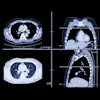
PDA has poor survival rates, as it's often diagnosed late -- in the absence of symptoms and visible tissue changes -- and it rapidly progresses, the researchers explained. They created an AI framework called Radiomics-based Early Detection MODel (REDMOD), specifically designed to identify subtle tissue texture patterns (that is, radiomics) of very early pancreatic cancer, which standard CT scans can't always see. As well, REDMOD delineates the borders of the pancreas from surrounding tissue/organs, thus eliminating the need for this to be done manually, according to the group.
Mukherjee and colleagues used REDMOD with abdominal CT scans from 219 patients who showed no evidence of disease after radiologist review but who were subsequently diagnosed with pancreatic cancer. In the majority of patients (40%), the cancer manifested in three to 12 months, while in 35% it appeared in 12 to 24 months and in 25% in more than 24 months. The investigators compared the scans from the 219 patients to 1,243 patients who did not develop pancreatic cancer up to three years later (matched by age, sex, and scan date).
They found that REDMOD could identify the "invisible" signature of preclinical pancreatic ductal adenocarcinoma an average of 475 days before clinical diagnosis -- a result that could significantly improve patient outcomes, they said in a statement released by the journal.
"This temporal window holds profound significance, as attaining such early detection would substantially augment the probability of cure and improved survival," the group noted. "In fact, modelling studies indicate that increasing the proportion of localized [PDAs] from 10% to 50% would more than double survival rates, thereby underscoring that the timing of diagnosis is the single most critical determinant of survival outcomes."
The team also reported the following:
- REDMOD was nearly twice as sensitive compared to radiologists at picking up early malignant cellular changes, at 73% compared to 39%.
- It was almost three times as accurate as radiologists for PDAs found more than two years before clinical diagnosis, at 68% compared to 23%.
The results show promise for improving outcomes of patients who are diagnosed with pancreatic cancer, according to the group.
"This study validates REDMOD as a fully automated AI framework capable of identifying the imaging signatures of stage 0 [PDA] in the normal pancreas, achieving this with substantial lead times and performance superior to expert radiologists," the team concluded.
Access the full study here.